
Introduction to Searing vs. Braising: Which Cabbage Technique is Right for Your Dinner?
As a busy mom, I know how precious time can be, especially when it comes to dinner. That’s why I’m excited to share the delightful world of cabbage cooking with you! In this post, we’ll explore the differences between searing and braising cabbage. Both techniques offer unique flavors and textures, making them perfect for any meal. Whether you’re looking for a quick solution for a hectic weeknight or a dish to impress your loved ones, understanding “Searing vs. Braising: Which Cabbage Technique is Right for Your Dinner?” will elevate your culinary game!
Why You’ll Love This Searing vs. Braising: Which Cabbage Technique is Right for Your Dinner?
You’ll adore these cabbage techniques for their simplicity and flavor! Searing gives you that satisfying crunch, while braising transforms cabbage into a tender, savory delight. Both methods are quick, making them perfect for busy evenings. Plus, they allow you to experiment with spices and seasonings, ensuring every meal feels special. Trust me, your family will be asking for seconds!
Ingredients for Searing vs. Braising: Which Cabbage Technique is Right for Your Dinner?
Gathering the right ingredients is the first step to a delicious cabbage dish! Here’s what you’ll need:
- Cabbage: The star of the show! Choose a fresh head of green or red cabbage for vibrant color and flavor.
- Olive oil: This adds richness and helps achieve that lovely golden crust when searing.
- Salt: A pinch enhances the natural flavors of the cabbage, making it pop!
- Pepper: Freshly cracked pepper adds a hint of spice and depth to your dish.
- Vegetable broth: Perfect for braising, it infuses the cabbage with savory goodness. You can use homemade or store-bought.
- Garlic (optional): A few cloves can elevate the flavor profile, adding a fragrant aroma.
- Onion (optional): Sautéing onions with garlic creates a sweet base that complements the cabbage beautifully.
Feel free to get creative! You can swap out the vegetable broth for chicken broth if you’re not strictly vegetarian. And if you’re feeling adventurous, try adding spices like cumin or smoked paprika for a unique twist. For exact quantities, check the bottom of the article where you can find everything available for printing!
How to Make Searing vs. Braising: Which Cabbage Technique is Right for Your Dinner?
Preparing the Cabbage
Start by removing the outer leaves of the cabbage. These can be tough and may not taste great. Once you’ve peeled them away, rinse the cabbage under cold water to clean it. Next, cut the cabbage into wedges. Aim for about six wedges, depending on the size of your cabbage. This shape helps the cabbage cook evenly, whether you’re searing or braising. Trust me, this simple prep makes all the difference!
Searing the Cabbage
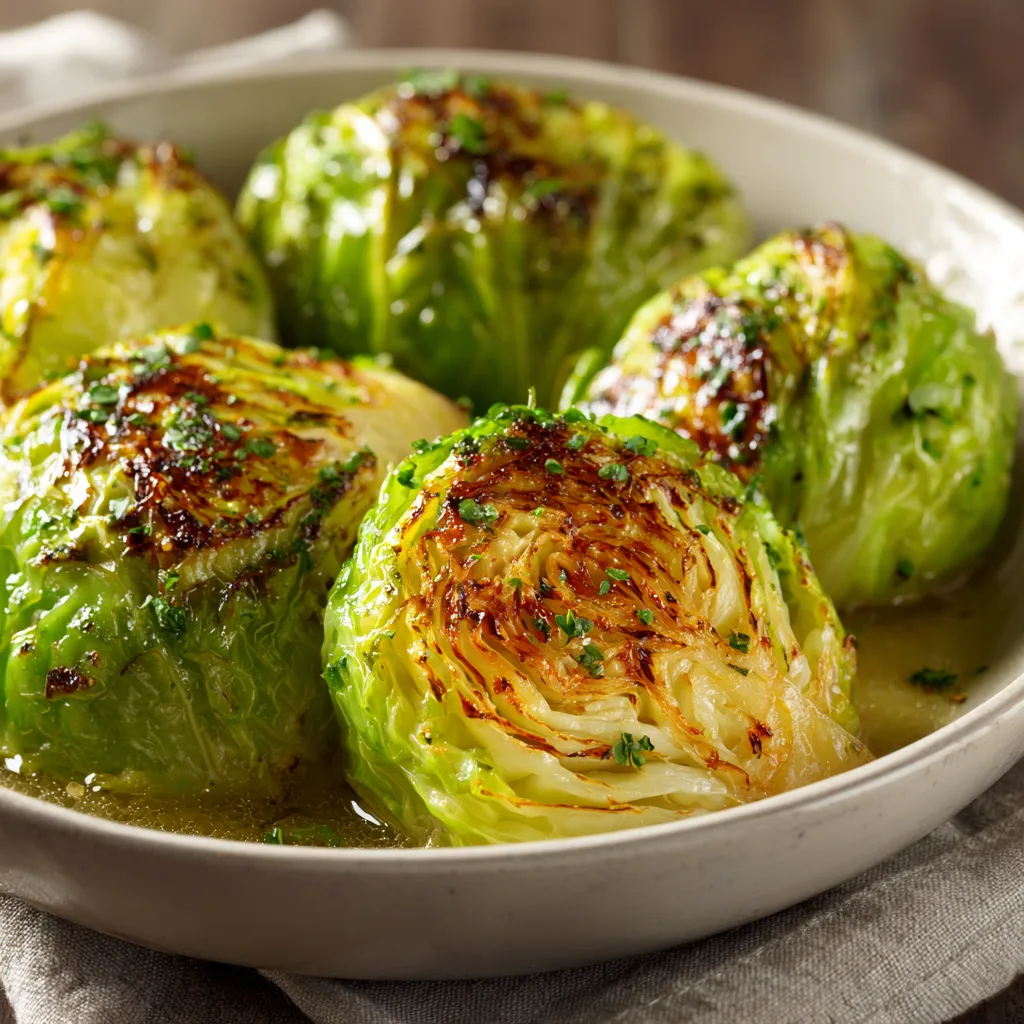
To sear the cabbage, heat a generous splash of olive oil in a large skillet over medium-high heat. Once the oil shimmers, carefully add the cabbage wedges. Let them sizzle away without moving them for about 3-4 minutes. This allows a beautiful golden crust to form. After that, flip the wedges and sear the other side for another 3-4 minutes. The result? A crispy, caramelized exterior that’s simply irresistible. Don’t forget to season with salt and pepper while they cook!
Braising the Cabbage
For braising, start by heating olive oil in a pot over medium heat. Add minced garlic and chopped onion, sautéing until they’re soft and fragrant. This step adds a lovely depth of flavor. Next, gently place the cabbage wedges into the pot. Pour in enough vegetable broth to cover the cabbage halfway. Cover the pot and let it simmer on low heat for about 15-20 minutes. The cabbage will become tender and soak up all that delicious broth. It’s a warm hug in a bowl!
Tips for Success
- Always use a sharp knife for clean cuts when preparing cabbage.
- Don’t overcrowd the pan while searing; this ensures even cooking.
- For extra flavor, let the cabbage rest after cooking before serving.
- Experiment with herbs like thyme or rosemary for added depth.
- Adjust the cooking time based on your preferred cabbage texture.
Equipment Needed for Searing vs. Braising: Which Cabbage Technique is Right for Your Dinner?
- Large skillet: Essential for searing; a non-stick pan works well too.
- Pot with a lid: Needed for braising; a Dutch oven is a great alternative.
- Sharp knife: For cutting cabbage; a chef’s knife is ideal.
- Cutting board: A sturdy surface for prep work.
Variations of Searing vs. Braising: Which Cabbage Technique is Right for Your Dinner?
- Spicy Kick: Add red pepper flakes or a splash of hot sauce to the braising liquid for a fiery twist.
- Asian Flair: Incorporate soy sauce and sesame oil while braising for an umami-packed flavor.
- Herb Infusion: Toss in fresh herbs like dill or parsley during the last few minutes of cooking for a fresh burst.
- Cheesy Delight: Top seared cabbage with grated Parmesan or feta cheese just before serving for a creamy finish.
- Vegan Option: Use coconut milk instead of vegetable broth for a rich, creamy braise that’s dairy-free.
Serving Suggestions for Searing vs. Braising: Which Cabbage Technique is Right for Your Dinner?
- Pair seared cabbage with grilled chicken or fish for a balanced meal.
- Serve braised cabbage alongside hearty grains like quinoa or brown rice.
- Drizzle a balsamic reduction over the cabbage for an elegant touch.
- Enjoy with a crisp white wine or sparkling water for a refreshing drink.
- Garnish with fresh herbs for a pop of color and flavor!
FAQs about Searing vs. Braising: Which Cabbage Technique is Right for Your Dinner?
Can I use other vegetables with these techniques? Absolutely! Both searing and braising work wonderfully with vegetables like carrots, Brussels sprouts, or even cauliflower. Just adjust the cooking times based on the vegetable’s density.
What’s the difference in flavor between seared and braised cabbage? Searing gives cabbage a crispy, caramelized exterior, while braising results in a tender, flavorful dish infused with broth. Each technique offers a unique taste experience!
How do I know when the cabbage is done cooking? For seared cabbage, look for a golden-brown crust. For braised cabbage, it should be tender when pierced with a fork. Both methods should be seasoned to taste before serving.
Can I combine both techniques? Yes! You can sear the cabbage first for that crispy texture, then add broth and braise it for a deliciously complex flavor. It’s a great way to enjoy the best of both worlds!
Is cabbage healthy? Definitely! Cabbage is low in calories and high in fiber, making it a nutritious addition to any meal. Plus, it’s packed with vitamins and antioxidants, promoting overall health.
Final Thoughts on Searing vs. Braising: Which Cabbage Technique is Right for Your Dinner?
Cooking cabbage using either searing or braising opens up a world of flavor and texture that can transform your dinner table. Each technique brings its own charm, whether it’s the crispy edges from searing or the tender, savory goodness from braising. I love how versatile cabbage can be, adapting to whatever mood or meal you’re preparing. Plus, it’s a fantastic way to sneak in some veggies for the family! So, roll up your sleeves, choose your technique, and enjoy the delightful journey of cooking cabbage. Your taste buds will thank you!
Print
Searing vs. Braising: Discover the Best Cabbage Technique!
- Total Time: 30 minutes
- Yield: 4 servings
- Diet: Vegetarian
Description
Explore the differences between searing and braising cabbage to determine the best cooking technique for your dinner.
Ingredients
- Cabbage
- Olive oil
- Salt
- Pepper
- Vegetable broth (for braising)
- Garlic (optional)
- Onion (optional)
Instructions
- Prepare the cabbage by removing the outer leaves and cutting it into wedges.
- For searing, heat olive oil in a pan over medium-high heat.
- Add the cabbage wedges and sear until golden brown on both sides.
- For braising, in a separate pot, heat olive oil and sauté garlic and onion until translucent.
- Add the cabbage wedges and pour in vegetable broth to cover halfway.
- Cover and simmer on low heat until the cabbage is tender.
- Season with salt and pepper to taste before serving.
Notes
- Searing gives a crispy texture while braising results in a tender, flavorful dish.
- Experiment with different seasonings to enhance the flavor.
- Both techniques can be combined for a unique dish.
- Prep Time: 10 minutes
- Cook Time: 20 minutes
- Category: Side Dish
- Method: Searing and Braising
- Cuisine: Various
Nutrition
- Serving Size: 1 cup
- Calories: 50
- Sugar: 2g
- Sodium: 200mg
- Fat: 3g
- Saturated Fat: 0.5g
- Unsaturated Fat: 2g
- Trans Fat: 0g
- Carbohydrates: 10g
- Fiber: 4g
- Protein: 2g
- Cholesterol: 0mg